Learning Lessons with Mrs. Labrasciano Home Shop Instagram Pinterest Email Image Map
Showing posts with label social studies. Show all posts

Teaching Elementary Students About Native American History

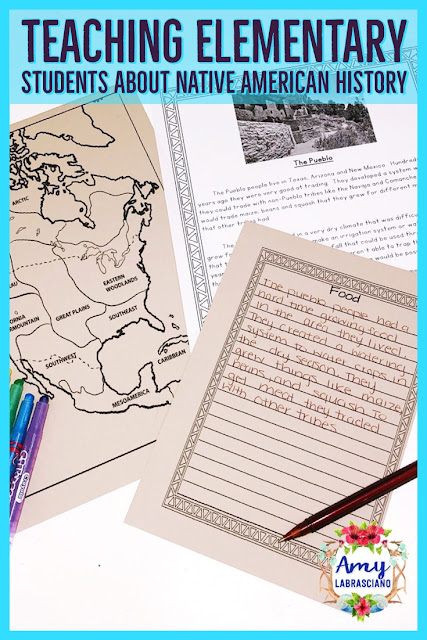
Click here to learn about teaching elementary students about Native American History.  You'll learn how to combine your Native American social studies unit together with reading and writing in order to fit everything into your year. Common core standards are included in the post to help you align your curriculum.  Perfect for 2nd grade and 3rd grade! {2nd, 3rd, homeschool} #nativeamerican #socialstudies


Do you have the honor of teaching your students about the Native American Nations?  It's always one of my students' favorite social studies units.  Along with the honor of teaching students about indigenous people also comes a great responsibility.  It's very important as educators that we are always in touch with our bias and misconceptions about different cultures when we plan and teach. In this post we will discuss what and how I teach about indigenous people of the United States.

Here are a few things to consider while lesson planning:

1.  Use terms like indigenous people, First Americans, Native Americans.
2.  Indigenous people span a large variety of nations and areas.  Discuss and explain to students that they are all vastly different and cannot be grouped together.
3. DON'T dress your students up! It's not o.k. and we should all know better by now.
4.  Don't speak of Native Americans in exclusively past tense form.  We always discuss our local communities and some examples of how Native Americans in the area currently live.  If we have any families in the class that come from the culture of topic, they are invited in to teach us about their culture.  This is a practice we use when learning about all cultures.

First American nations are vastly different and diverse.  Due to this, my Native American Unit is my longest social studies unit of the year.  We touch on this unit during Thanksgiving when we read and learn about the true story of Thanksgiving.  We discuss this during our immigration unit when we learn who the first immigrants to the United States were and we have a month long unit in the spring when we learn about some of the different regions of indigenous nations.

In order to fit this unit into our packed schedule, we align the unit to our reading and writing standards.  I live in Florida which has adapted common core standards.

For shared reading we spend about two weeks reading about some of the different North American regions.  I align the lessons to these standards:

STANDARDS
CCSS.ELA-LITERACY.RI.2.1
Ask and answer such questions as who, what, where, when, why, and how to demonstrate understanding of key details in a text.
CCSS.ELA-LITERACY.RI.2.2
Identify the main topic of a multiparagraph text as well as the focus of specific paragraphs within the text.
CCSS.ELA-LITERACY.RI.2.3
Describe the connection between a series of historical events, scientific ideas or concepts, or steps in technical procedures in a text.
In writing we spend an entire month creating informative pieces.  I align the lessons to these standards:
CCSS.ELA-LITERACY.W.2.2
Write informative/explanatory texts in which they introduce a topic, use facts and definitions to develop points, and provide a concluding statement or section.
CCSS.ELA-LITERACY.W.2.5
With guidance and support from adults and peers, focus on a topic and strengthen writing as needed by revising and editing.
CCSS.ELA-LITERACY.W.2.7
Participate in shared research and writing projects (e.g., read a number of books on a single topic to produce a report; record science observations).
Click here to learn about teaching elementary students about Native American History.  You'll learn how to combine your Native American social studies unit together with reading and writing in order to fit everything into your year. Common core standards are included in the post to help you align your curriculum.  Perfect for 2nd grade and 3rd grade!


The main regions that we focus on are:
REGIONS
1. Northwest
2. Northeast (Eastern Woodlands)
3. Southwest
4. Southeast
5. Plains

We discuss the areas and the natural resources that each habitat had to offer the people who lived in the region.  We learn the names of different groups who resided in the area.  We also learn about one nation from the region.

While learning about the natural resources we focus on these:
AREAS TO COVER
1.  Food
2.  Clothing
3.  Shelter
4.  Practices
5.  Art
Click here to learn about teaching elementary students about Native American History.  You'll learn how to combine your Native American social studies unit together with reading and writing in order to fit everything into your year. Common core standards are included in the post to help you align your curriculum.  Perfect for 2nd grade and 3rd grade!

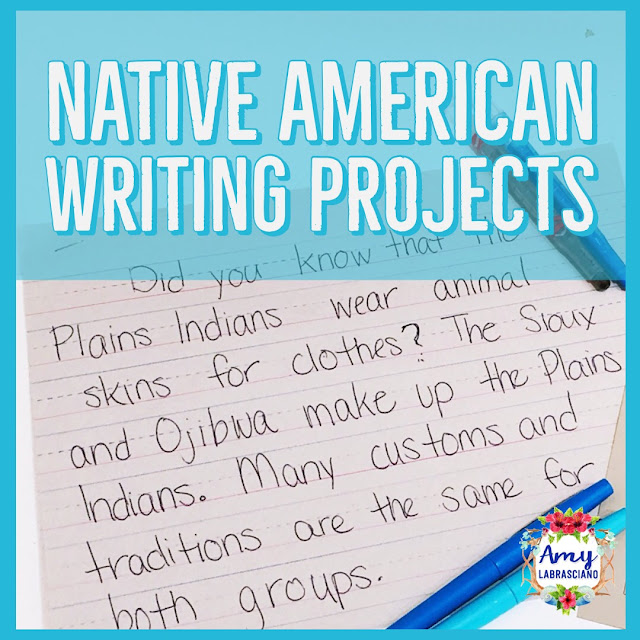
While reading and writing, students gather information in order to answer writing prompts that I've given them so that they can compose a book from the region of their choice.  In the book, all on level and above level students write 7 paragraphs with support from me.  The task is shortened for below level students according to their needs.  The writing pieces  have the introduction, the five areas mentioned above, each with it's own paragraph and the conclusion.  Depending on the student, some of these paragraphs are shorter than others.  We start the reading unit one week before we start the writing unit so that students have had a chance to learn a little about the different areas and can then make their choice of what to write about.  Each student is given the opportunity to choose  their region of choice because it makes them more invested in the task and they take it more serious.

Click here to learn about teaching elementary students about Native American History.  You'll learn how to combine your Native American social studies unit together with reading and writing in order to fit everything into your year. Common core standards are included in the post to help you align your curriculum.  Perfect for 2nd grade and 3rd grade!

Click here to learn about teaching elementary students about Native American History.  You'll learn how to combine your Native American social studies unit together with reading and writing in order to fit everything into your year. Common core standards are included in the post to help you align your curriculum.  Perfect for 2nd grade and 3rd grade!
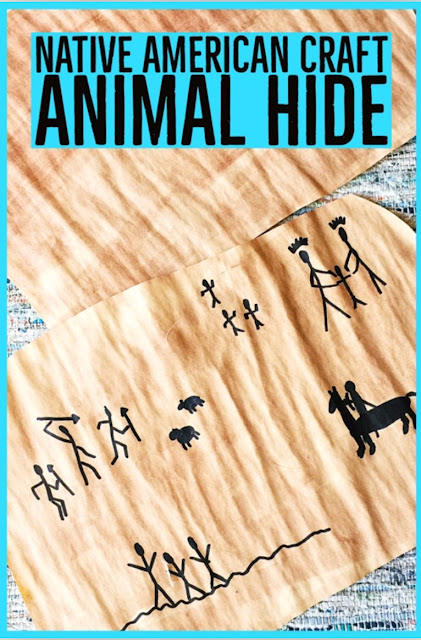
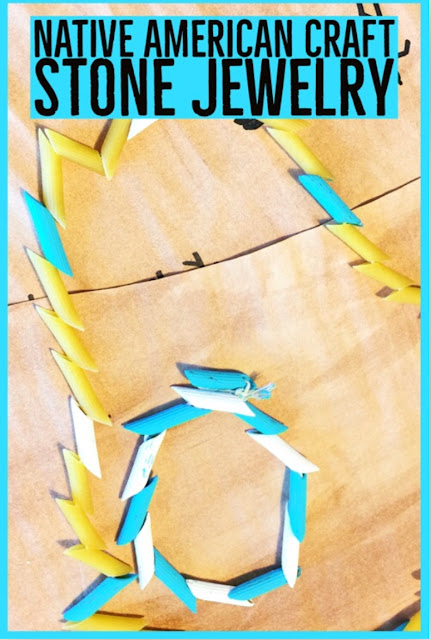
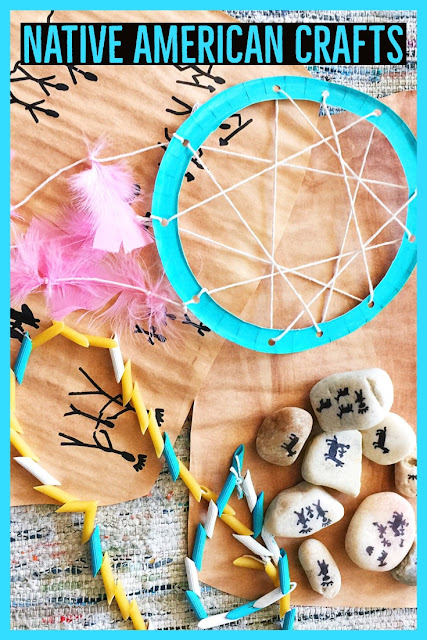
When students are done with their writing piece they get to choose a piece of art from their region to create.  They must learn about the significance of the piece that they are making before they get to make it.  Because we are on a strict budget, we use what materials we have on hand. I will show you the art below with the region.  Just click on the pictures when you are done reading this post to go to a more detailed post about the art work.

Southwest Rock Drawings
Click here to learn about teaching elementary students about Native American History.  You'll learn how to combine your Native American social studies unit together with reading and writing in order to fit everything into your year. Common core standards are included in the post to help you align your curriculum.  Perfect for 2nd grade and 3rd grade!


Plains & Southeast Animal Hides
Click here to learn about teaching elementary students about Native American History.  You'll learn how to combine your Native American social studies unit together with reading and writing in order to fit everything into your year. Common core standards are included in the post to help you align your curriculum.  Perfect for 2nd grade and 3rd grade!

Northwest Dream Catcher
Click here to learn about teaching elementary students about Native American History.  You'll learn how to combine your Native American social studies unit together with reading and writing in order to fit everything into your year. Common core standards are included in the post to help you align your curriculum.  Perfect for 2nd grade and 3rd grade!

Northeast Jewelry
Click here to learn about teaching elementary students about Native American History.  You'll learn how to combine your Native American social studies unit together with reading and writing in order to fit everything into your year. Common core standards are included in the post to help you align your curriculum.  Perfect for 2nd grade and 3rd grade!

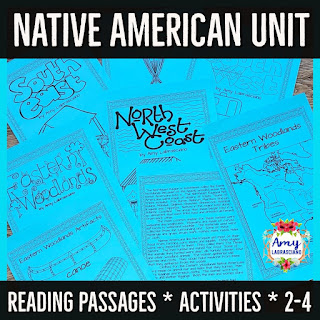
This social studies unit takes a lot of resources to teach.  In order to meet all of the students' needs, I wrote two different social studies units to teach with.  I have a Native American Unit that includes passages from each region listed above, writing books and task cards.  The passages each focus on all the information listed in the post.  I also have a unit on specific Native American nations.  The nations are: Cherokee, Sioux, Wampanoag, Pueblo and Comanche. You can find these units by clicking below.  Feel free to leave any comments with lessons that worked for your class.  We always learn and teach better together.  Feel free to email me any questions that you may have. Happy teaching!
Click here to learn about teaching elementary students about Native American History.  You'll learn how to combine your Native American social studies unit together with reading and writing in order to fit everything into your year. Common core standards are included in the post to help you align your curriculum.  Perfect for 2nd grade and 3rd grade!

Integrating Social Studies and Bibliotherapy (Character Education) into ELA


Recently I was blessed to present a PD with two wonderful women. One of which is a school counselor and the other is a general education teacher like myself.  We collaborated together to bring our expertise in curriculum to one place so that teachers can integrate their curriculum through a meaningful yet simple way.  I'm including some of the slides from the presentation here along with our explanations so that teachers all over can benefit from our work.


The following slide was written to fit in with our district's guidelines.  If it doesn't work for yours, feel free to disregard.


The above professional development book is awesome for integrating bibliotherapy into the classroom.  Mrs. Gruener has a ton of examples and suggestions for books and lessons in the classroom.

The slides below are different books that we discussed integrating into shared reading for bibliotherapy.


Social Studies is near and dear to my heart.  We didn't include book slides because we had numerous examples in the room.  Below are some of the suggestions that we gave.


Citizenship
ELECTRONICS:  But It’s Just A Game, By Julia Cook

WORRYING AND ANXIETY:  Wilma Jean The Worry Machine, By Julia Cook, Wendell the Worrier, by Jill Donahue

MAKING MISTAKES: The Girl Who Never Made Mistakes, by Mark Pett, Oops! My Bad…A Kids Guide to Making Mistakes, by Tracy Bryan, Beautiful Oops!, Barney Saltzberg

ATTITUDE:  Battitude by Julia Cook

LYING:  Lying Up A Storm by Julia Cook, Superman: Fighting for the Truth, by Donald Lemke and Ethen Beavers

CONFLICT RESOLUTION:  The Recess Queen by Alexis O’Neill

SERVICE: Crash! By Mayra Calvani, Loving Marley by Donald and Sara Hassler and Good News Nelson by Jodi Moore
Clara Barton

Native Americans and their love for the Earth
UNCONDITIONAL LOVE

Colonial America
PERSERVANCE: Henry Ford, Thomas Edison

Immigration
EMPATHY:Harvesting Hope: The story of Cesar Chavez by Kathleen Krull, The Whispering Town by Jennifer Elvgren
John Howard Griffin, Patricia Moore, Jane Adams

DIVERSITY, CULTURE AND DIFFERENCES:  Spaghetti In A Hot Dog Bun, by Kimberly Shaw-Peterson, Don’t Laugh At Me, by Steve Sesking, Chocolate Milk Por Favor by Maria Desmandy

Citizenship, American Symbols
RESPECT: Hey Little Ant by Phillip and Hannah Hoose, One by Kathryn Otoshi and Spaghetti in a Hot Dog Bun: Having the Courage to Be Who You Are by Maria Dismondy
Jane Goodall, Rosa Parks

HONESTY: Sarah’s Little Ghosts by Thiery Robberecht, Ruthie and the (Not So) Teeny, Tiny Lie by Laura Rankin,
Abraham Lincoln

ENTHUSIASM: Incredible You! and Unstoppable Me! By Dr. Wayne Dryer
Bessie Coleman, Mae Jemison

Economics
RESPONSIBILITY: Squawking Matilda by Lisa Horstman
Community Helpers

Government
OBEDIENCE: What if Everybody Did That? By Ellen Javernick
Service Dogs

ENCOURAGEMENT: Wemberly Worried by Kevin Henkes and Go Away Worries! by Michelle White.
Nelson Mandela

SELF-DISCIPLINE: Verdi by Janell Cannon, Big Anthony and the Magic Ring by Tomie dePaola, The Stonecutter by Gerald McDermott, Yertle the Turtle, Bartholomew and the Oobleck and Gertrude McFuzz by Dr. Seuss
Frederick Douglas, Helen Keller, Temple Grandin


Social Studies: American Symbols


We had a lot of fun in class this past week learning about American Symbols.

Some of the activities that we did:
Museum Walk- I put symbols around the classroom for the children to look at.  For some of them it was their first time seeing some of the symbols.  The kids glanced at the picture and then the name trying to create connections with their learning.
Reading:  We read lots of books to tell us the hows and whys of symbols.  Did you know that Mt. Rushmore was created to draw in tourism? I guess I learned something too.
Task cards:  Once the students were familiar with the symbols and their facts, they worked with task cards.
Video:  We found a video on youtube that showed us a few of the symbols.

This is the list of American symbols that I used:
American Bald Eagle
American Flag
The White House
The Liberty Bell
The Statue of Liberty
The Lincoln Memorial
The Jefferson Memorial
The Washington Monument
Mt. Rushmore
WW1 Memorial
Presidential Seal
Declaration of Independence
Uncle Sam
The Rose
Airforce One

Here are some of the books that we looked at.

If you click on the photo below it will take you to the video on youtube.

This pack contains more reading material and task cards that we used.

Social Studies: Teaching Immigration

Click here to learn all about teaching elementary students about immigration in social studies.  Included are ideas about immigration, Ellis Island and famous American immigrants.  Perfect for 2nd, 3rd and 4th grade. {second, third, fourth grade, homeschool}


Teaching students about immigration can be fun and engaging for your students!  We always kick off this unit with a study on different cultures from around the world.  You can find more information about these lessons in our culture blog post.  After the culture unit we learn the key points below:

1.  Definition of immigration.
2.  The history of Ellis Island.
3.  The why's and how's of immigration.
4.  The influences of immigration on American culture.

Below you will find books on the topic of immigration.

Click here to learn all about teaching elementary students about immigration in social studies.  Included are ideas about immigration, Ellis Island and famous American immigrants.  Perfect for 2nd, 3rd and 4th grade. {second, third, fourth grade, homeschool}

The documentary below is a little boring, but it does a good job of showing why people left their countries and what they found in Ellis Island.  Just click on the picture for the link to youtube.

Click here to learn all about teaching elementary students about immigration in social studies.  Included are ideas about immigration, Ellis Island and famous American immigrants.  Perfect for 2nd, 3rd and 4th grade. {second, third, fourth grade, homeschool}

While learning about immigration we learn about Ellis Island and different famous Americans who have immigrated from other countries.  Students are assigned a research project for homework.  They get to choose Ellis Island or a famous person who immigrated to the U.S.  They can make a poster, book report, display or anything that their heart desires.  They have to include:  topic, birthdate, death date, key details and what the person or place was famous for.  Students have a lot of fun presenting these projects in class.  Everyone gets to learn about all of the people that their peers found interesting.

Click here to learn all about teaching elementary students about immigration in social studies.  Included are ideas about immigration, Ellis Island and famous American immigrants.  Perfect for 2nd, 3rd and 4th grade. {second, third, fourth grade, homeschool}

Click here to learn all about teaching elementary students about immigration in social studies.  Included are ideas about immigration, Ellis Island and famous American immigrants.  Perfect for 2nd, 3rd and 4th grade. {second, third, fourth grade, homeschool}


During the unit, I use passages and task cards written on immigration, Ellis Island and Cesar Chavez.  I wrote these passages to fit in perfectly with the unit. If you want to just print and teach, you can find these units by clicking below.

Click here to learn all about teaching elementary students about immigration in social studies.  Included are ideas about immigration, Ellis Island and famous American immigrants.  Perfect for 2nd, 3rd and 4th grade. {second, third, fourth grade, homeschool}


Click here to learn all about teaching elementary students about immigration in social studies.  Included are ideas about immigration, Ellis Island and famous American immigrants.  Perfect for 2nd, 3rd and 4th grade. {second, third, fourth grade, homeschool}


Cultures of The World Fair

Click here to learn how to host a culture fair with your elementary students.  These fun ideas work for any primary or intermediate classroom.  You’ll be able to incorporate reading, writing and social studies together for a unit packed with fun.  Your kindergarten, first, second, third, fourth,  and fifth grade students will loves this activity.  {kindergarten, first, second, third, fourth, fifth grade, homeschool} #culturefair #culture


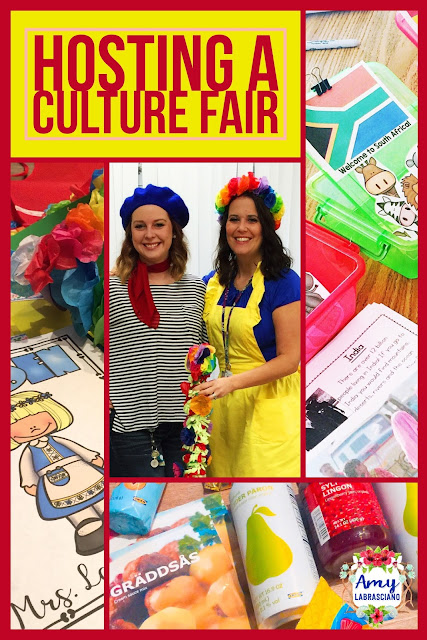
Part of our social studies standards are to learn how cultures from around the world affect our culture.  There's no better way to start this standard than to learn about cultures from around the world.  The problem for me was how to teach the students about several cultures within the time that we had available.  This is when I thought of a cultural fair.  I talked my team into teaching  each of their classes about a different country and some of the different cultures within that country.
We had the students research:  food, art, music, clothing, customs, and language.  Each class put together a science board with some of the research.  We also hung other research on the walls outside of our classrooms.  This way the students had plenty of room to read about the different cultures.

Click here to learn how to host a culture fair with your elementary students.  These fun ideas work for any primary or intermediate classroom.  You’ll be able to incorporate reading, writing and social studies together for a unit packed with fun.  Your kindergarten, first, second, third, fourth,  and fifth grade students will loves this activity.  {kindergarten, first, second, third, fourth, fifth grade, homeschool} #culturefair #culture

 We chose to hold the fair the day before Thanksgiving break.  The cultural fair was so engaging, the students were sure to learn all the way through the end of the day.  We weren't so sure that would happen with our every day lessons.  Each class prepared one of the more popular food or drinks from their country.  I bought prepackaged food from Ikea for my country.  This helps to satisfy the rule in some schools of prepackaged food.  The year before we had a parent make our food at home.  (I did not serve the pear drink.)

Click here to learn how to host a culture fair with your elementary students.  These fun ideas work for any primary or intermediate classroom.  You’ll be able to incorporate reading, writing and social studies together for a unit packed with fun.  Your kindergarten, first, second, third, fourth,  and fifth grade students will loves this activity.  {kindergarten, first, second, third, fourth, fifth grade, homeschool} #culturefair #culture

Each classroom can have a quick craft inside for the students to complete. We made floral headbands for Sweden.  Most countries have flowers in their culture so this is a wonderful go to craft.  If you search on Pinterest, you will find a plethora of cultural crafts.  We also used the folders that you see below to hold all of our research in reading and writing.

Click here to learn how to host a culture fair with your elementary students.  These fun ideas work for any primary or intermediate classroom.  You’ll be able to incorporate reading, writing and social studies together for a unit packed with fun.  Your kindergarten, first, second, third, fourth,  and fifth grade students will loves this activity.  {kindergarten, first, second, third, fourth, fifth grade, homeschool} #culturefair #culture


Every student was given a passport with the countries listed inside.  The students were to record details from every country that they visited.  So we allowed students to roam the hall.  They went into the rooms to enjoy food and a craft.  They read information on the countries outside of the rooms.  Their teachers held them accountable for details by checking their passports.  We had parent volunteers to come in to assist the students in moving throughout the hall and into the appropriate rooms.  If you can't do a whole grade level Culture Fair, you can set up centers in your classroom.  You can have groups of students research different countries and share with each other.

Click here to learn how to host a culture fair with your elementary students.  These fun ideas work for any primary or intermediate classroom.  You’ll be able to incorporate reading, writing and social studies together for a unit packed with fun.  Your kindergarten, first, second, third, fourth,  and fifth grade students will loves this activity.  {kindergarten, first, second, third, fourth, fifth grade, homeschool} #culturefair #culture


Putting together the materials for this unit took quite a while.  If you don't have time to put them together, check out the units below in my store.

Click here to learn how to host a culture fair with your elementary students.  These fun ideas work for any primary or intermediate classroom.  You’ll be able to incorporate reading, writing and social studies together for a unit packed with fun.  Your kindergarten, first, second, third, fourth,  and fifth grade students will loves this activity.  {kindergarten, first, second, third, fourth, fifth grade, homeschool} #culturefair #culture